Carrollton, Texas
One building, every stage
100,000 square feet in the middle of Dallas–Fort Worth. Inspection, consolidation, repair, refurbishment, storage, and consignment all happen at one address — your fleet never leaves the building to reach the next stage.
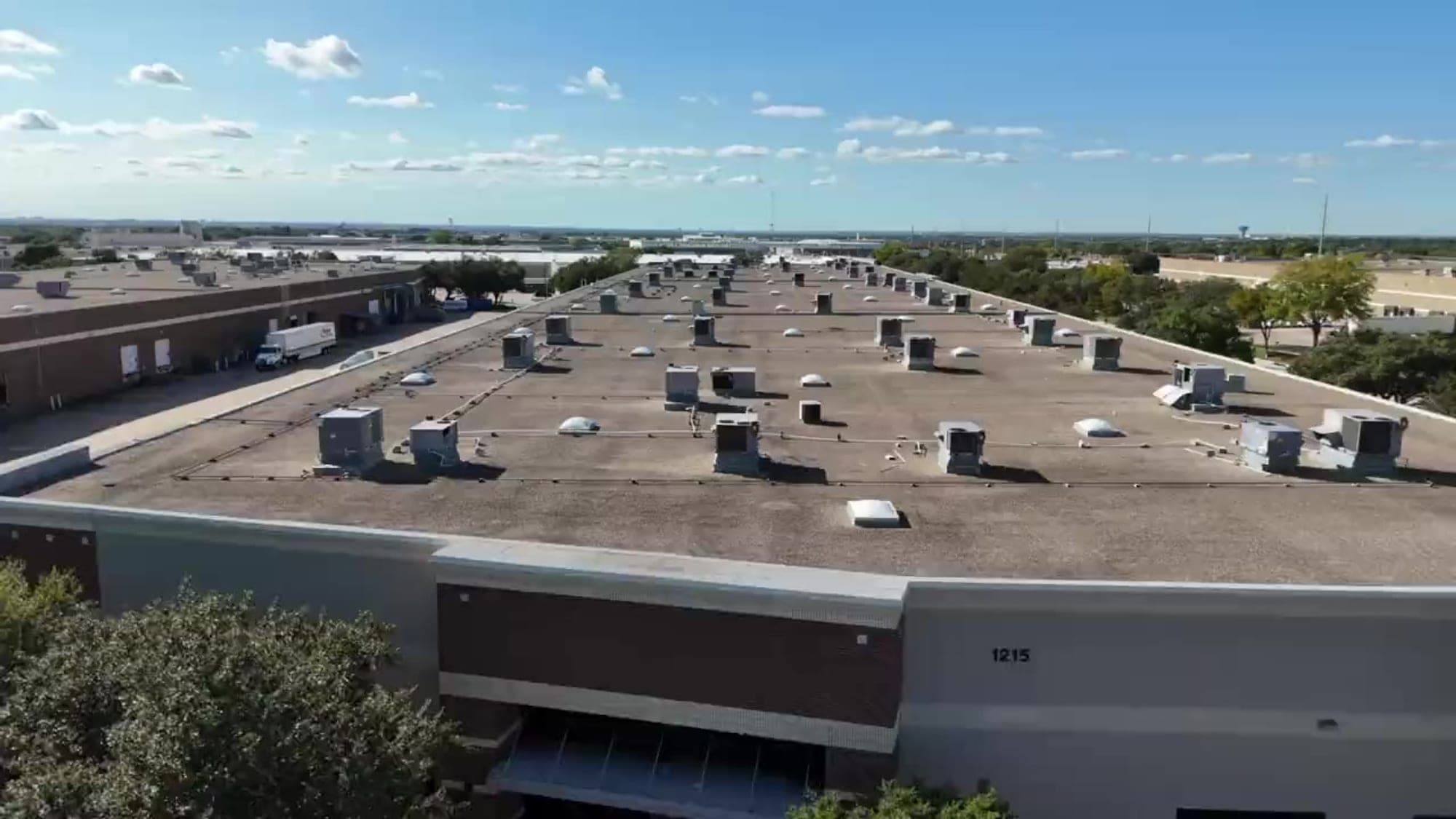
- Under one roof
100,000 sq ft
Under one roof
- Dock-high doors
12 docks
Dock-high doors
- Alarmed and monitored
24/7
Alarmed and monitored
- People on the floor
40+
People on the floor
Why one roof
One contract, one accountable party
The six stages exist separately in the market. Running them in sequence usually means a handoff between vendors at every step. Each handoff re-establishes chain of custody, adds a bill of lading and a freight leg, and gives a serial number one more chance to stop matching a machine. None of those vendors owns the outcome.
ACS is the only single-contract option that runs inspection through consignment with one accountable party. This building is what makes that possible: the same team that receives your fleet is the team that grades, repairs, stores, and sells it, and the whole sequence happens between rooms at one address.
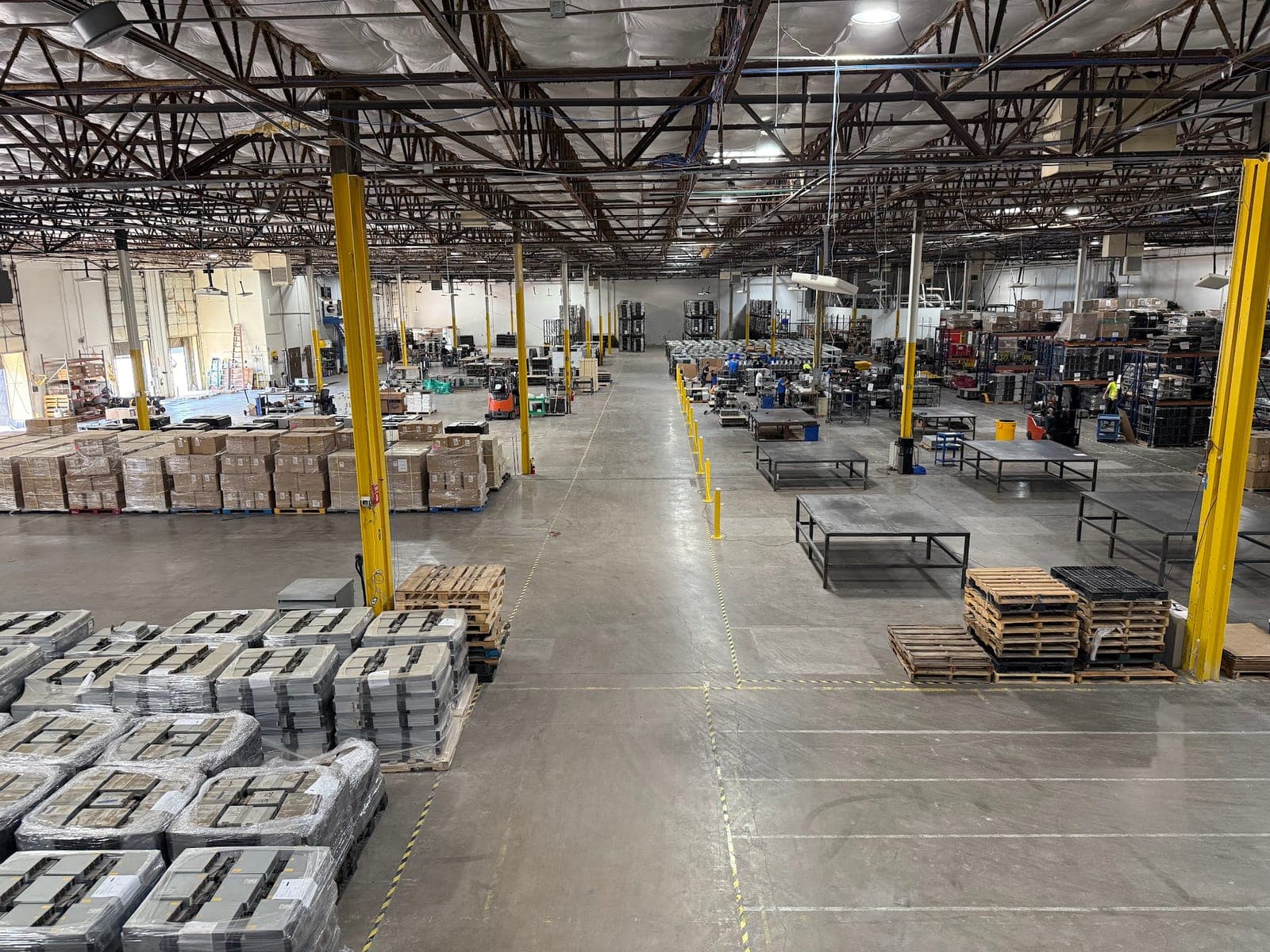
The walkthrough
Follow a pallet from the dock to the market
Receiving and the dock line
Stage: inspection
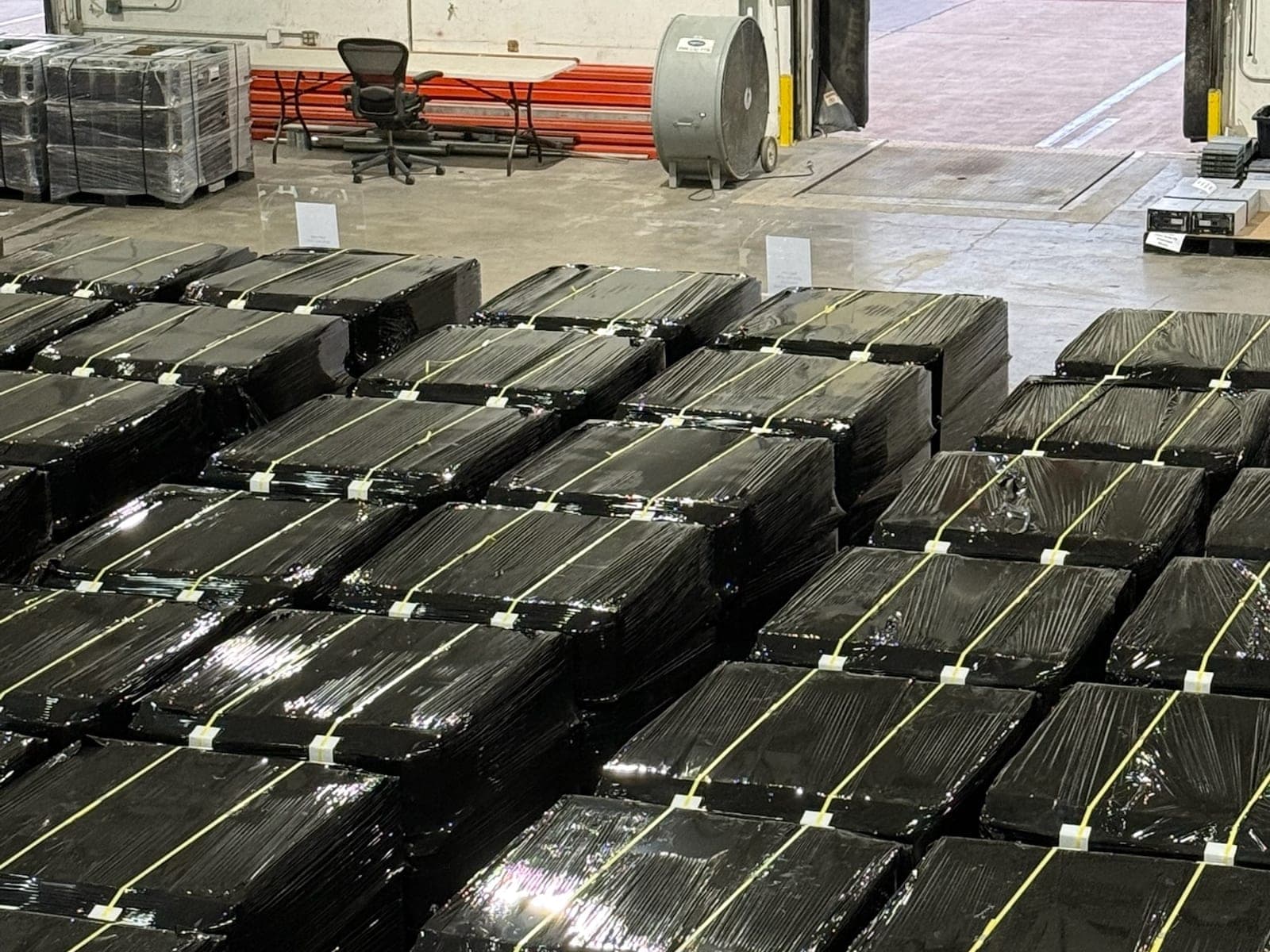
12 dock-high doors run the length of the receiving wall. Full truckload and LTL deliveries are unloaded, counted, and serialized against the manifest before a pallet moves inland, and every unit is photographed on arrival. Capacity at the dock is what keeps a large intake from turning into a yard full of waiting trailers.
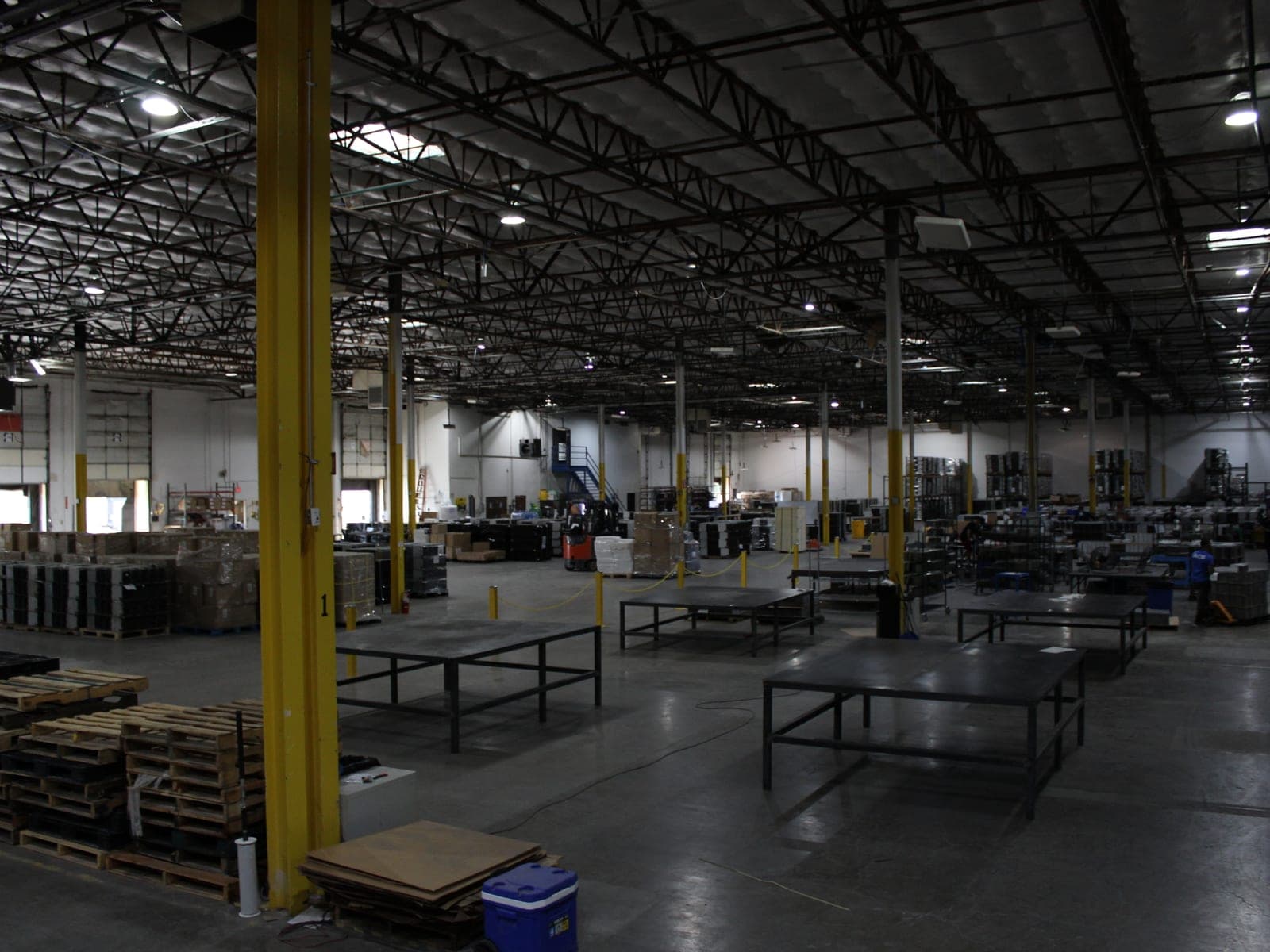
The inspection floor
Stage: inspection
Units come off the dock onto dedicated test benches, where each one is powered up, logged, and photographed. The result is a per-serial condition record rather than a lot-level estimate — which is what makes the difference between a repair quote and a guess, and what a broker or lender needs in hand before a deal closes.
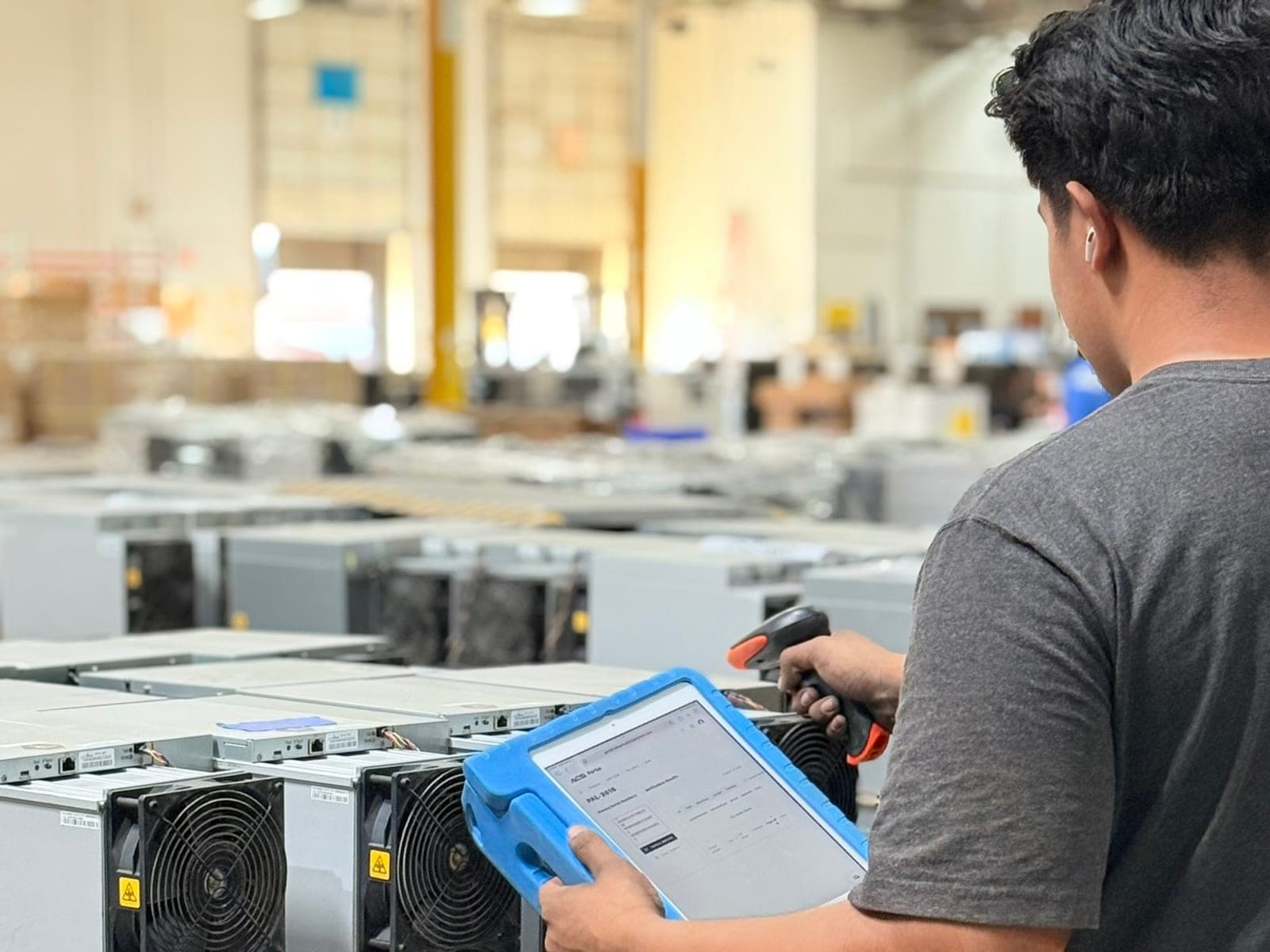
The dedicated repair lab
Stages: repair and refurbishment
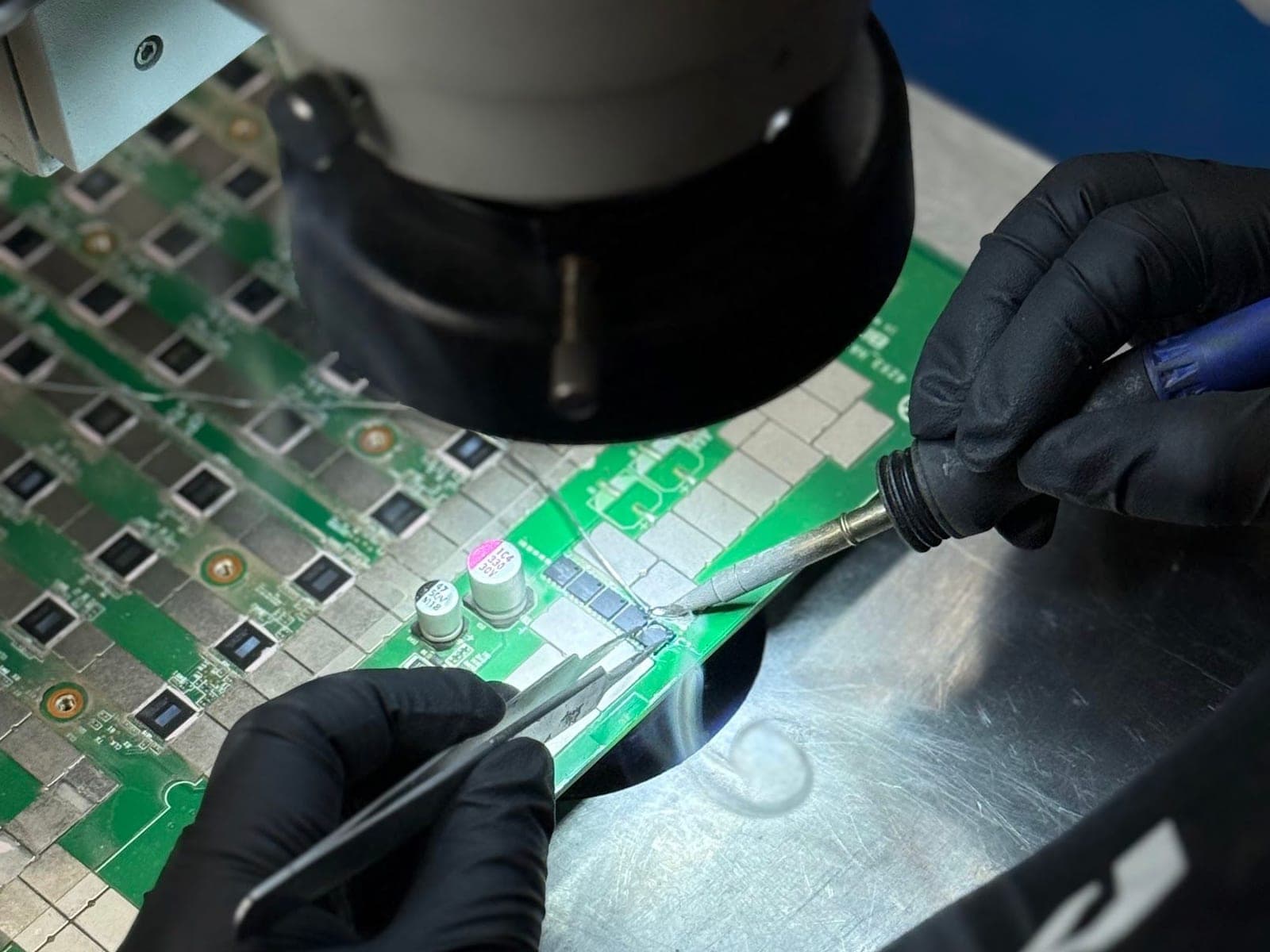
The repair lab is a separate, purpose-built room — rework stations, microscopy, hot air and preheat, and ultrasonic cleaning, kept apart from the dust and noise of the warehouse floor. Board-level repair is the work that most of the market sends out; here it happens at the same address as everything around it.
The consolidation floor
Stage: consolidation
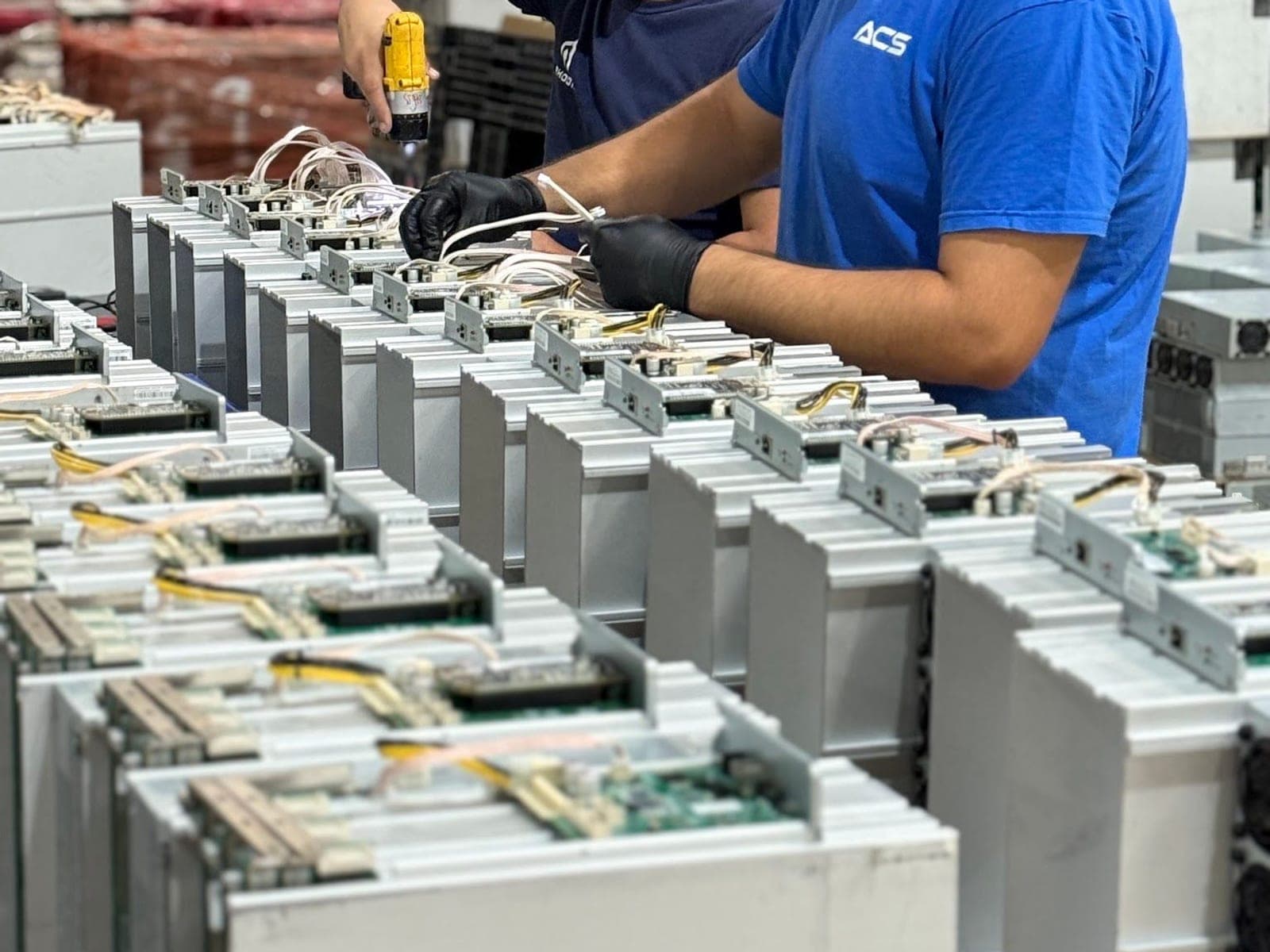
Consolidation needs floor space and it needs the donor units physically present. Incomplete machines are staged together, matched by model and revision, and rebuilt into whole working units rather than written down as scrap — hashboards, control boards, PSUs, and chassis recombined across the fleet. Holding a whole fleet in one building is what lets it happen without a unit shipping anywhere first.
Electronics design and manufacturing
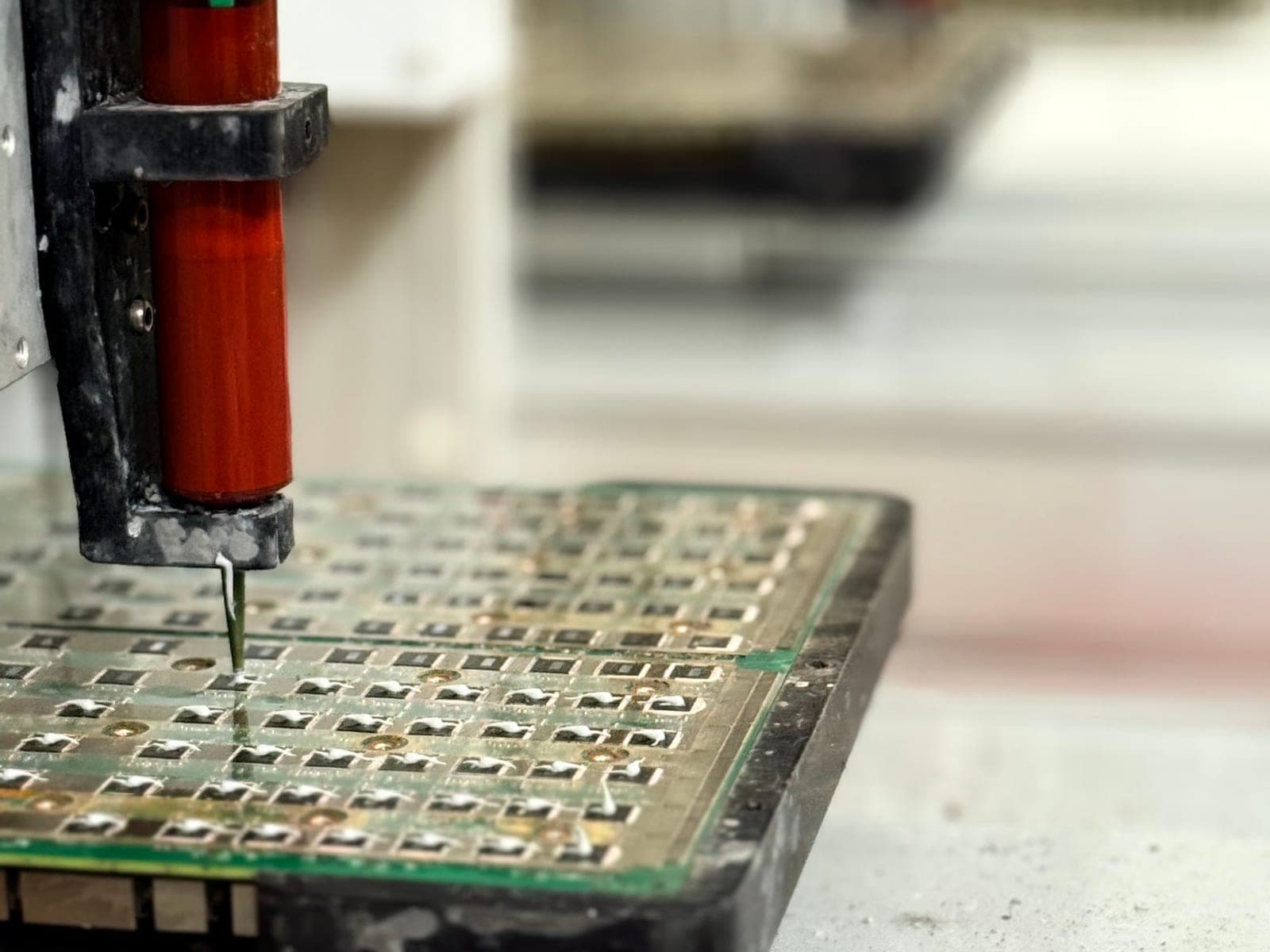
A dedicated electronics design and manufacturing line runs inside the same building. It is how ACS-branded hardware gets built, and it means design, assembly, and the repair expertise that informs both sit within a few hundred feet of each other instead of across a supply chain.
Climate-controlled storage and 3PL
Stage: storage
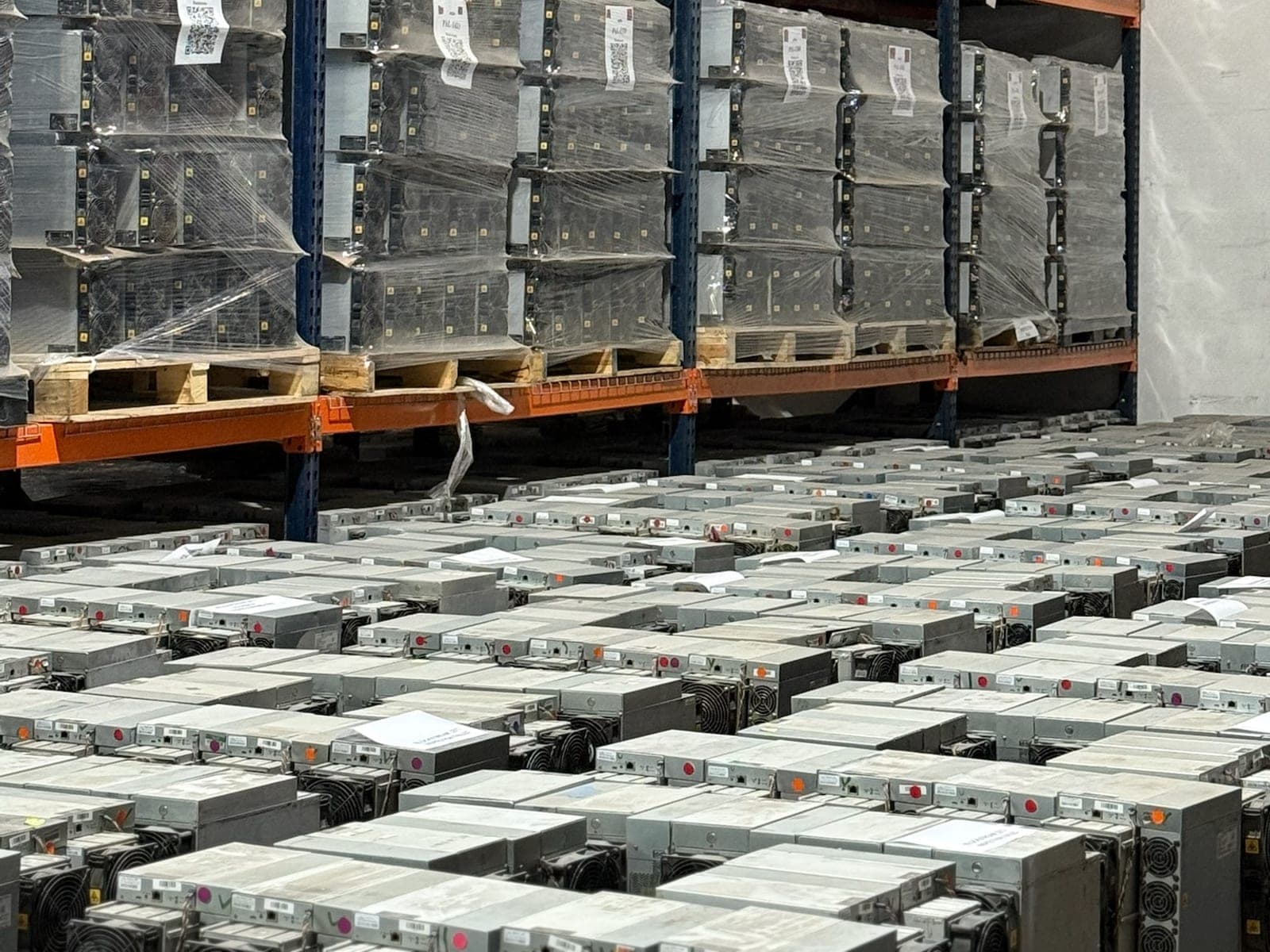
Third-party logistics and warehousing operate out of the same footprint: racked, climate-controlled storage with tracked inventory and retrieval on demand. Controlled temperature and humidity matter for hardware that may sit between a market cycle and a redeployment — condensation and thermal cycling are what turn stored machines into repair tickets.
Outbound and consignment staging
Stage: consignment
Finished units are repalletized, documented, and staged for outbound freight, or held and listed for consignment without being shipped anywhere first. A machine that sells from consignment has moved between rooms in one building since the day it arrived — never between vendors.
Security and environment
Built to hold other people's equipment
Alarmed and access-controlled
The building is alarmed and entry is controlled. Customer equipment sits inside a secured perimeter from the moment it is unloaded.
Monitored 24/7
Camera coverage and monitoring run around the clock, every day of the year — not only during shift hours.
Climate controlled
Temperature and humidity are controlled across the footprint, including the storage racks, which protects hardware held long-term between deployments.
Documented custody
Units are serialized at intake and tracked by serial through every stage, so the chain of custody is a record rather than a recollection.
Location
Central to the country, not just to Texas
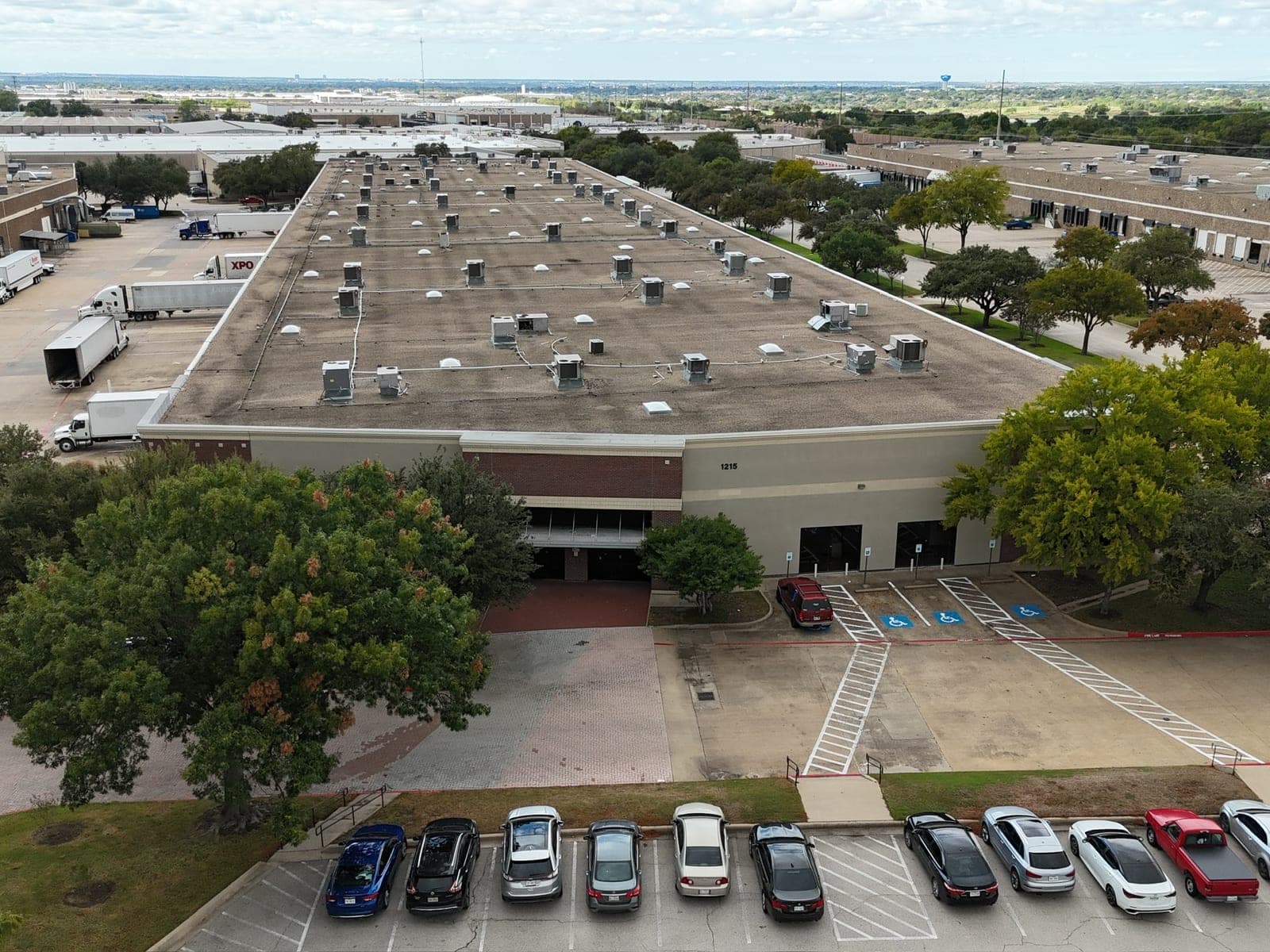
The facility sits in Carrollton, inside the Dallas–Fort Worth metroplex — one of the largest inland freight hubs in the United States, with interstate access in every direction and every national LTL and FTL carrier already running lanes through it.
For a fleet coming off a site in West Texas, the Dakotas, or Appalachia, that means a carrier who already serves the destination and a rate that reflects a well-served lane rather than a detour. It is also close enough to visit: customers fly into DFW or Love Field and walk the floor the same day.
Freight and visitors
1215 Marsh Lane, Suite 180, Carrollton, TX 75006Logistics and freight coordinationCome see it for yourself
ACS has processed 500,000+ ASICs since 2021. This is where that work happens now. Tell us when you're in Dallas–Fort Worth and we'll walk you the whole building — dock to consignment.